Overview
What It Does
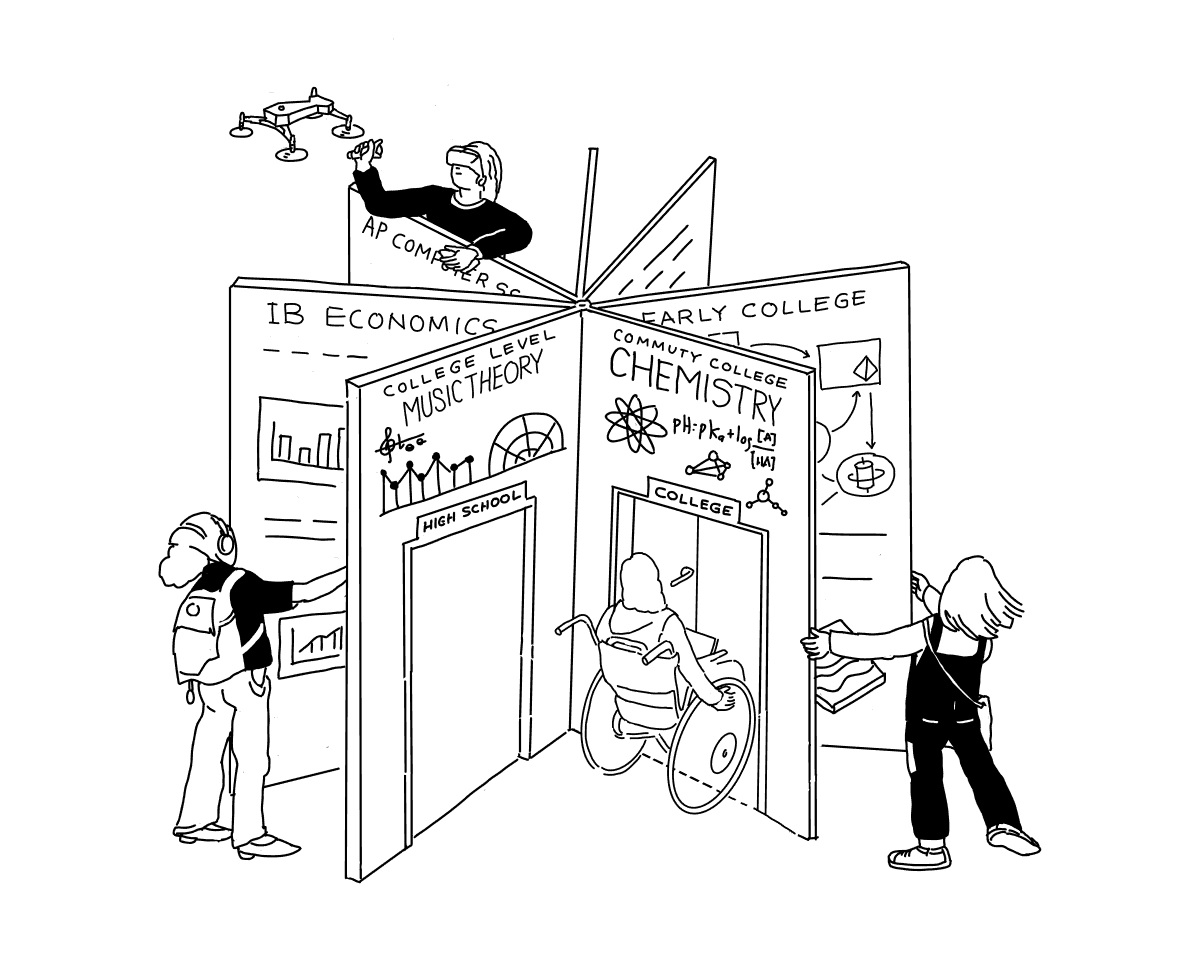
Every student who meets the requirements for graduation has the option of pursuing higher education—even if they don’t go right away—and the process of applying for college becomes seamless.
Why It Matters
Most teenagers aspire to go to college, and postsecondary credentials improve economic outcomes for both individuals and states. But too many students work hard to complete required coursework only to find out they’re not eligible to enroll at a public college or university in their own state. Even eligible, qualified students don’t always make it through the maze of requirements needed for admission.
To be sure, today’s teenagers want choices. Not every student will eventually earn a four-year degree. But every student needs to be prepared not just for work or postsecondary education, but for both work and postsecondary education. Over the course of their lives, they may need to move from work to education to training and back again—perhaps many times, as challenges arise and opportunities present themselves.
Criteria
To meet the criteria for this policy action, a state will have adopted policies that reinforce K-16 alignment by adopting one or both of the following policies:
A default diploma policy that aligns coursework required for graduation with the courses necessary to be eligible for the state’s flagship institution of public higher education (See the full report for further details)
A direct admissions program that proactively notifies qualified high school seniors that they have guaranteed admission to one or more institutions of public higher education. To qualify based on this criterion, the direct admissions policy must:
Provide proactive notification to students of admission;
Include participation of multiple 4-year institutions;
Not limit eligibility to top-performing students (as distinguished from “Top 10%” automatic admission policies or policies requiring additional coursework); and
Offer participation to high schools across the state. (We designate direct admission pilot programs as “in progress” until expanded statewide.)