Overview
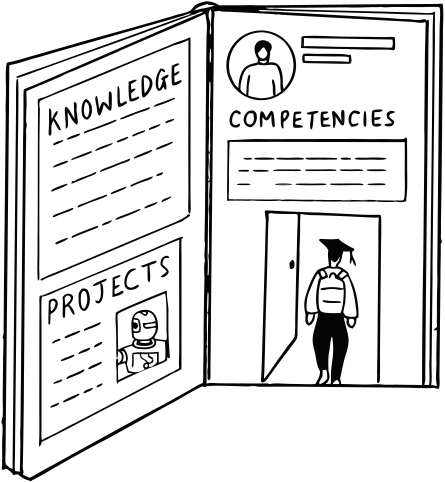
State leaders in North Carolina have adopted a number of policies that bridge the gap between K-12 education and workforce readiness, including the development of a Portrait of Graduate focused on deeper student learning and marketable skills. The Portrait aligns with the state’s myFutureNC initiative, which has a goal of empowering 2 million North Carolinians between the ages of 25 and 44 to hold an industry credential or postsecondary degree by 2030. The state department of education also recently announced a partnership with the Carnegie Foundation and ETS to develop new assessment systems aligned to the durable skills and competencies in the state’s graduate profile.
North Carolina has also taken steps to ensure that every student who completes the state’s “Future-Ready Course of Study” earns a diploma that meets the requirements for the University of North Carolina system. Going one step further, to make higher education more accessible to high school students, the University of North Carolina system and North Carolina Independent Colleges and Universities have launched simplified college application processes for students who earn a diploma and have a GPA of 2.8 or above.
Through these and other initiatives designed to support postsecondary success, state leaders in North Carolina are providing a strong foundation for high school transformation. To build on this work, state leaders could create greater flexibility from seat time requirements, and explore opportunities for a statewide initiative with dedicated resources to incentivize community-based high school redesign.