10 State

Policy Actions

10 State

Policy Actions

Policy Action
1

Redesigned Transcripts

Develop modern transcripts that reflect a broader range of student achievement

Policy Action
1

Redesigned Transcripts

Develop modern transcripts that reflect a broader range of student achievement

Policy Action
1

Redesigned Transcripts

Develop modern transcripts that reflect a broader range of student achievement

Overview
Overview
Overview

The high school transcript has been a staple of K-12 education for over a century. Indeed, the factors that drove the invention of the Carnegie Unit in 1906—the rapid growth of high schools across an expanding nation and the need to standardize college admissions—also created a need to keep a consistent record of a student’s coursework and grades.

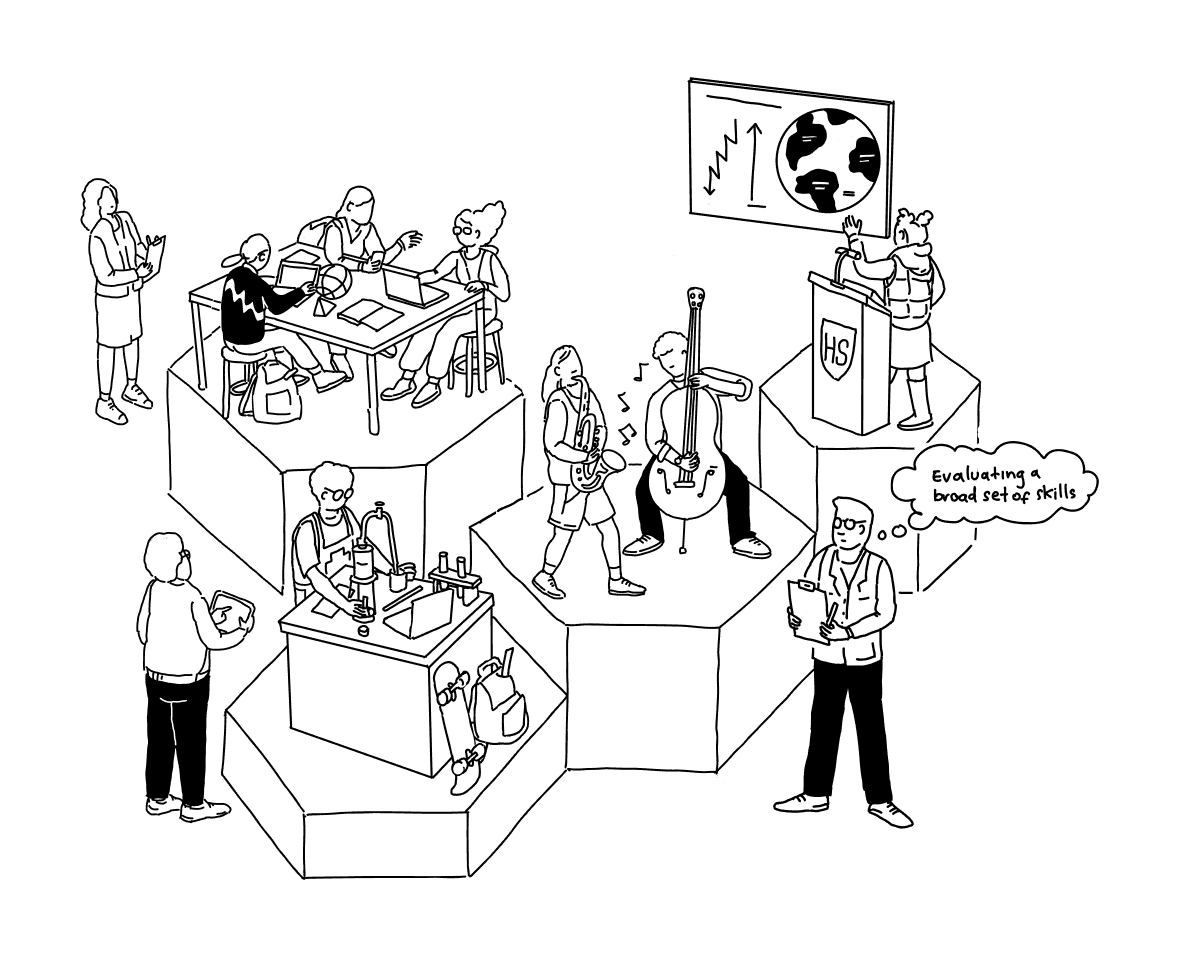
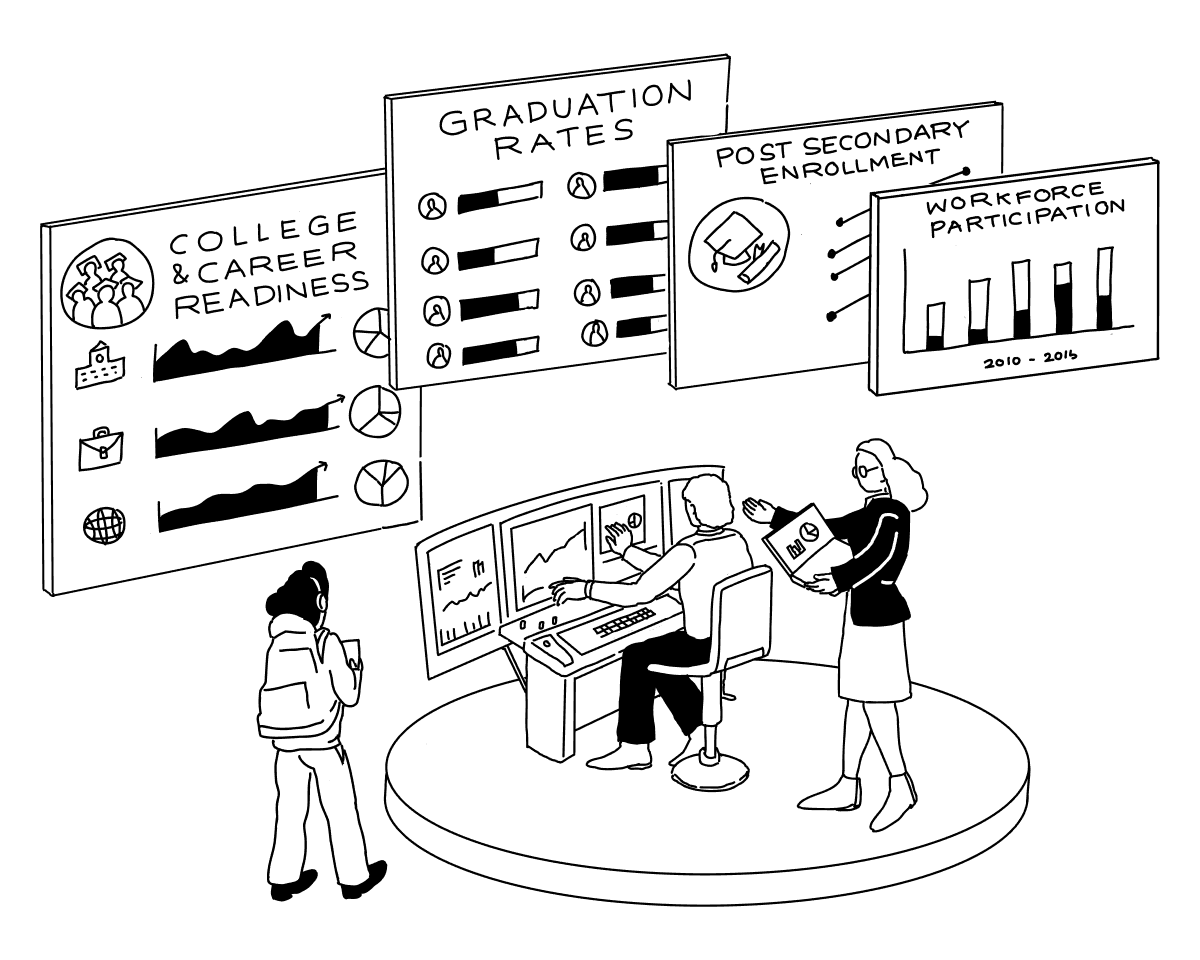
Unfortunately, today’s high school transcripts—which look largely the same as they did a century ago—offer only a narrow, two-dimensional view of students, conveying little about their mastery of knowledge and competencies and even less about their accomplishments within and out-of-school. Like the Carnegie Unit, the conventional high school transcript is a relic of a bygone era: an innovation that once served an important purpose, but whose time has passed.

Take, for example, a traditional transcript that shows a “C” in 9th grade algebra. What does that grade actually tell us? What course material did the student truly understand, and what learning gaps remained? Even if the transcript could answer such questions, it still wouldn’t convey the student’s mastery of the kinds of durable competencies described in a state’s Profile of a Graduate.

As states and communities reimagine high school, students need new types of transcripts and learning records—ones that go beyond a list of courses and grades and enable students to communicate, “Here are the competencies I’ve mastered—and here’s what I can do with them.”

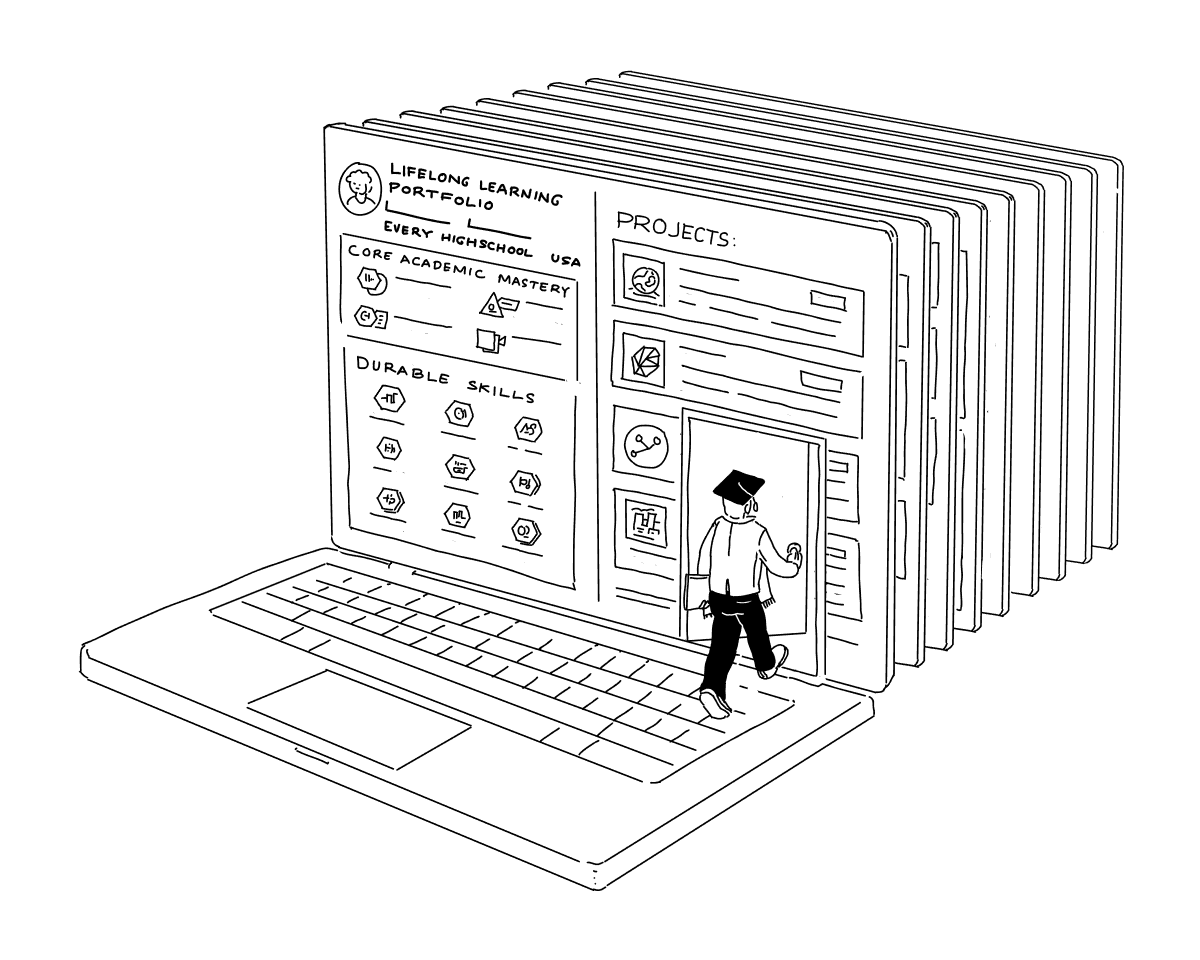
Redesigned transcripts can carry greater value as students transition into higher education, career training, and the labor market, enabling graduates to showcase their unique strengths and capabilities in ways a traditional transcript never could. By incorporating new ways to credential learning—such as digital badges—these transcripts can reflect knowledge and skills gained both in and beyond the classroom and support credit toward graduation based on demonstrated mastery.

Finally, it’s clear that students themselves readily see the value of redesigning the traditional school transcript. As one student participant in a transcript redesign pilot told us, “Using the mastery transcript, I love that way more than traditional grading.”

Criteria
Criteria
Criteria

To meet the criteria for this policy action, a state will have:


  1. Adopted a new student transcript, badging, or record system, such as learning and employment records (LERs), that award students badges or other types of credentials for demonstrating the requisite knowledge, skills, and competencies.


  2. States need both the infrastructure to demonstrate student competencies and also the artifacts (e.g., badges) to be included.
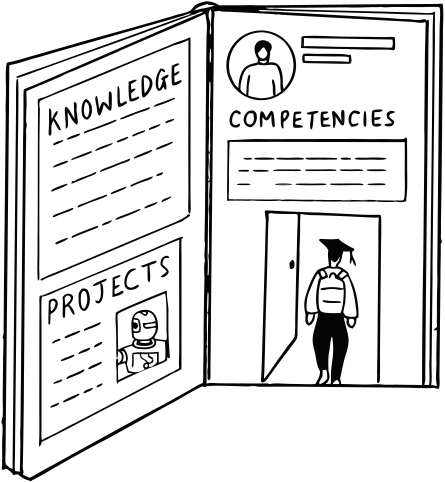
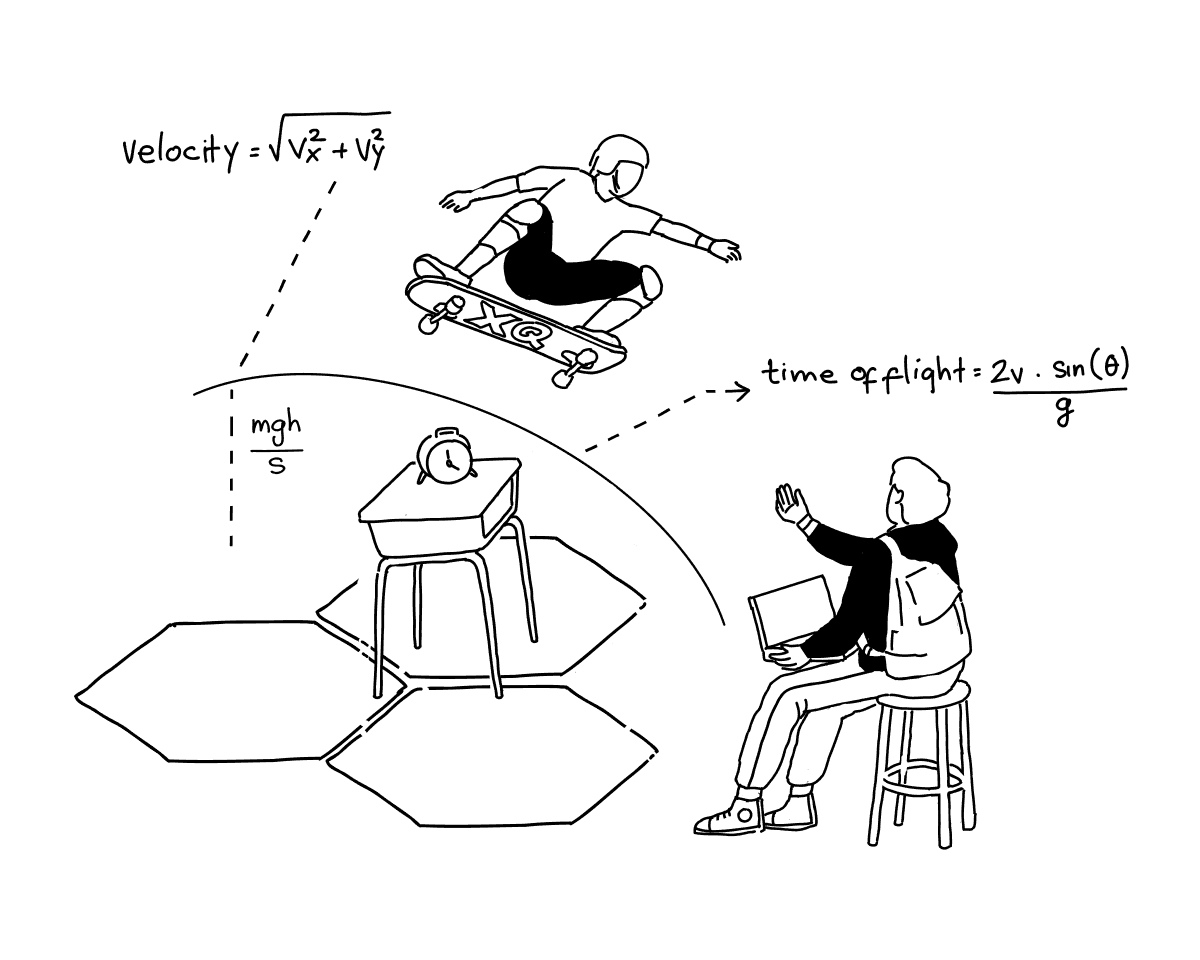
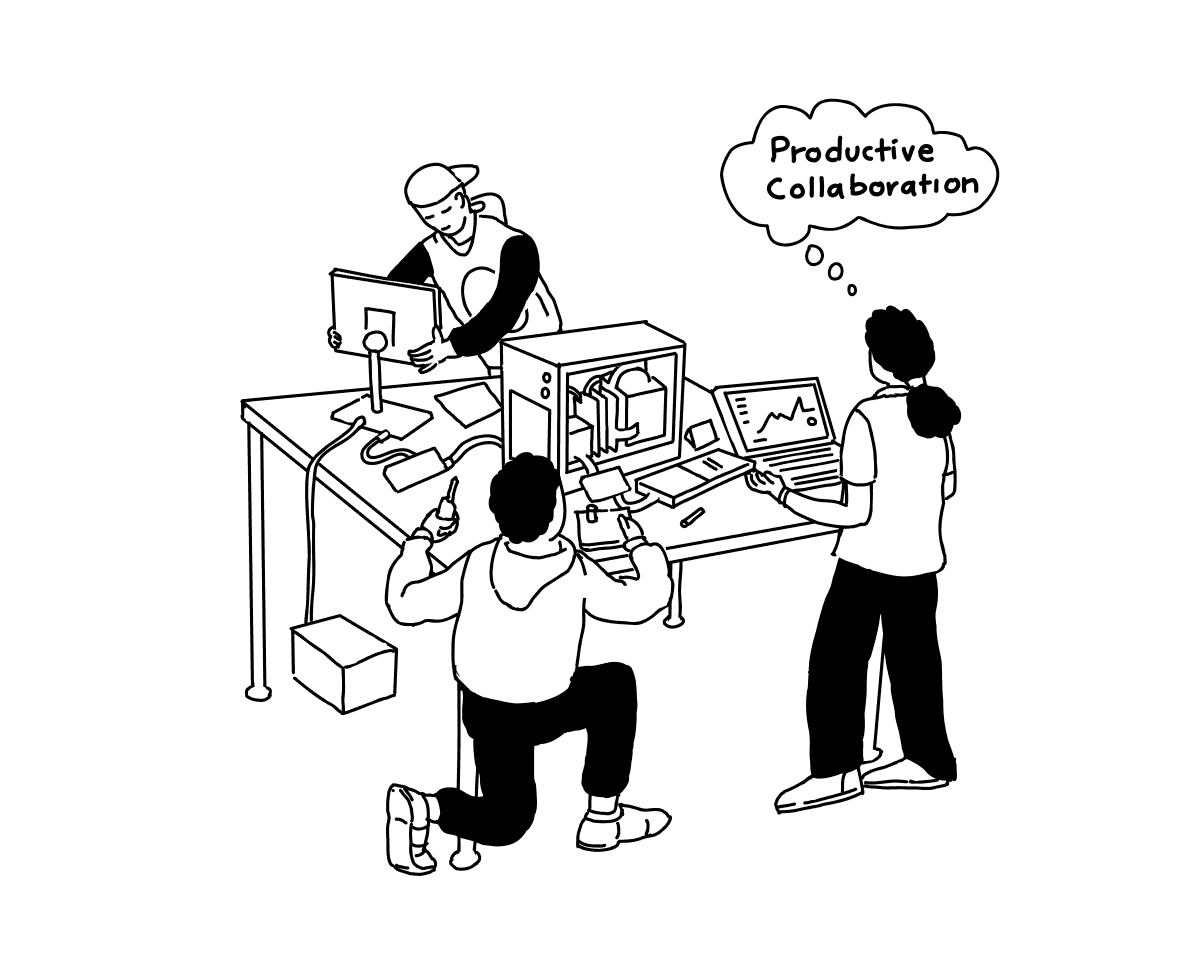
Excellence looks like: transcripts that open doors because they clearly demonstrate what graduates can do, digital, lifelong learning portfolios that employers value and potential employees can use to demonstrate skills and know-how.

Download the How to Be a Frontier for State Excellence Guide here

The National Landscape

Every state and D.C. meets the criteria for at least one policy action.

The National Landscape

Every state and D.C. meets the criteria for at least one policy action.

North Dakota

is leading the way

Since 2018., North Dakota has been a national leader in its efforts to support personalized competency-based learning as a driver for student success after high school in the modern workforce. That year, the North Dakota Department of Public Instruction collaborated with KnowledgeWorks to launch a five-year North Dakota Personalized, Competency-Based Learning Initiative to support pilots in a handful of districts and a broader learning community across the state. In parallel with these efforts, the state has also been a national leader in developing the technical infrastructure that could serve as the foundation for a new high school transcript. In 2022, North Dakota announced the launch of an LER system and first-of­ its-kind digital wallet that will give learners more ownership of their credentials and allow them to share a digital transcript with college admissions officers. The platform is a critical piece of technical infrastructure, serving as a precursor to the development of competency-based badges that could have currency with higher education institutions and employers-work that is currently underway in the state.

Utah

is leading the way

State leaders in Utah have been supporting the transition to personalized competency­ based education for over a decade by, among other things, rethinking student transcripts. In 2023, Utah launched a pilot program with the Mastery Transcript Consortium to develop new competency-based learning records that align with the state's Portrait of a Graduate. Utah's work to redesign transcripts follows on the heels of other statewide efforts to foster its vision for Personalized, Competency-Based Learning (PCBL). For example, state leaders have provided significant support for educators through a PCBL grant program and a PCBL learning framework. (Policy Action 7).

North Dakota

is leading the way

Since 2018., North Dakota has been a national leader in its efforts to support personalized competency-based learning as a driver for student success after high school in the modern workforce. That year, the North Dakota Department of Public Instruction collaborated with KnowledgeWorks to launch a five-year North Dakota Personalized, Competency-Based Learning Initiative to support pilots in a handful of districts and a broader learning community across the state. In parallel with these efforts, the state has also been a national leader in developing the technical infrastructure that could serve as the foundation for a new high school transcript. In 2022, North Dakota announced the launch of an LER system and first-of­ its-kind digital wallet that will give learners more ownership of their credentials and allow them to share a digital transcript with college admissions officers. The platform is a critical piece of technical infrastructure, serving as a precursor to the development of competency-based badges that could have currency with higher education institutions and employers-work that is currently underway in the state.

Utah

is leading the way

State leaders in Utah have been supporting the transition to personalized competency­ based education for over a decade by, among other things, rethinking student transcripts. In 2023, Utah launched a pilot program with the Mastery Transcript Consortium to develop new competency-based learning records that align with the state's Portrait of a Graduate. Utah's work to redesign transcripts follows on the heels of other statewide efforts to foster its vision for Personalized, Competency-Based Learning (PCBL). For example, state leaders have provided significant support for educators through a PCBL grant program and a PCBL learning framework. (Policy Action 7).

North Dakota

is leading the way

Since 2018., North Dakota has been a national leader in its efforts to support personalized competency-based learning as a driver for student success after high school in the modern workforce. That year, the North Dakota Department of Public Instruction collaborated with KnowledgeWorks to launch a five-year North Dakota Personalized, Competency-Based Learning Initiative to support pilots in a handful of districts and a broader learning community across the state. In parallel with these efforts, the state has also been a national leader in developing the technical infrastructure that could serve as the foundation for a new high school transcript. In 2022, North Dakota announced the launch of an LER system and first-of­ its-kind digital wallet that will give learners more ownership of their credentials and allow them to share a digital transcript with college admissions officers. The platform is a critical piece of technical infrastructure, serving as a precursor to the development of competency-based badges that could have currency with higher education institutions and employers-work that is currently underway in the state.

Utah

is leading the way

State leaders in Utah have been supporting the transition to personalized competency­ based education for over a decade by, among other things, rethinking student transcripts. In 2023, Utah launched a pilot program with the Mastery Transcript Consortium to develop new competency-based learning records that align with the state's Portrait of a Graduate. Utah's work to redesign transcripts follows on the heels of other statewide efforts to foster its vision for Personalized, Competency-Based Learning (PCBL). For example, state leaders have provided significant support for educators through a PCBL grant program and a PCBL learning framework. (Policy Action 7).

What you can do

Resources

Adopt a Portrait of a Graduate or similar competency framework (Policy Action 2).
Launch a high school redesign initiative and/or programs that equip educators for high school transformation.
Develop the necessary technical infrastructure.
Explore new assessments.
Issue badges with currency.

What you can do

Resources

Adopt a Portrait of a Graduate or similar competency framework (Policy Action 2).
Launch a high school redesign initiative and/or programs that equip educators for high school transformation.
Develop the necessary technical infrastructure.
Explore new assessments.
Issue badges with currency.

What you can do

Resources

Adopt a Portrait of a Graduate or similar competency framework (Policy Action 2).
Launch a high school redesign initiative and/or programs that equip educators for high school transformation.
Develop the necessary technical infrastructure.
Explore new assessments.
Issue badges with currency.
Keep Exploring

Keep Exploring

Keep Exploring

© 2025 XQ Institute

Privacy Policy

Terms of Use

About XQ

© 2025 XQ Institute

Privacy Policy

Terms of Use

About XQ

XQ Chat

December 18, 2025

Loading Policy Chat...

XQ Chat

December 18, 2025

Loading Policy Chat...