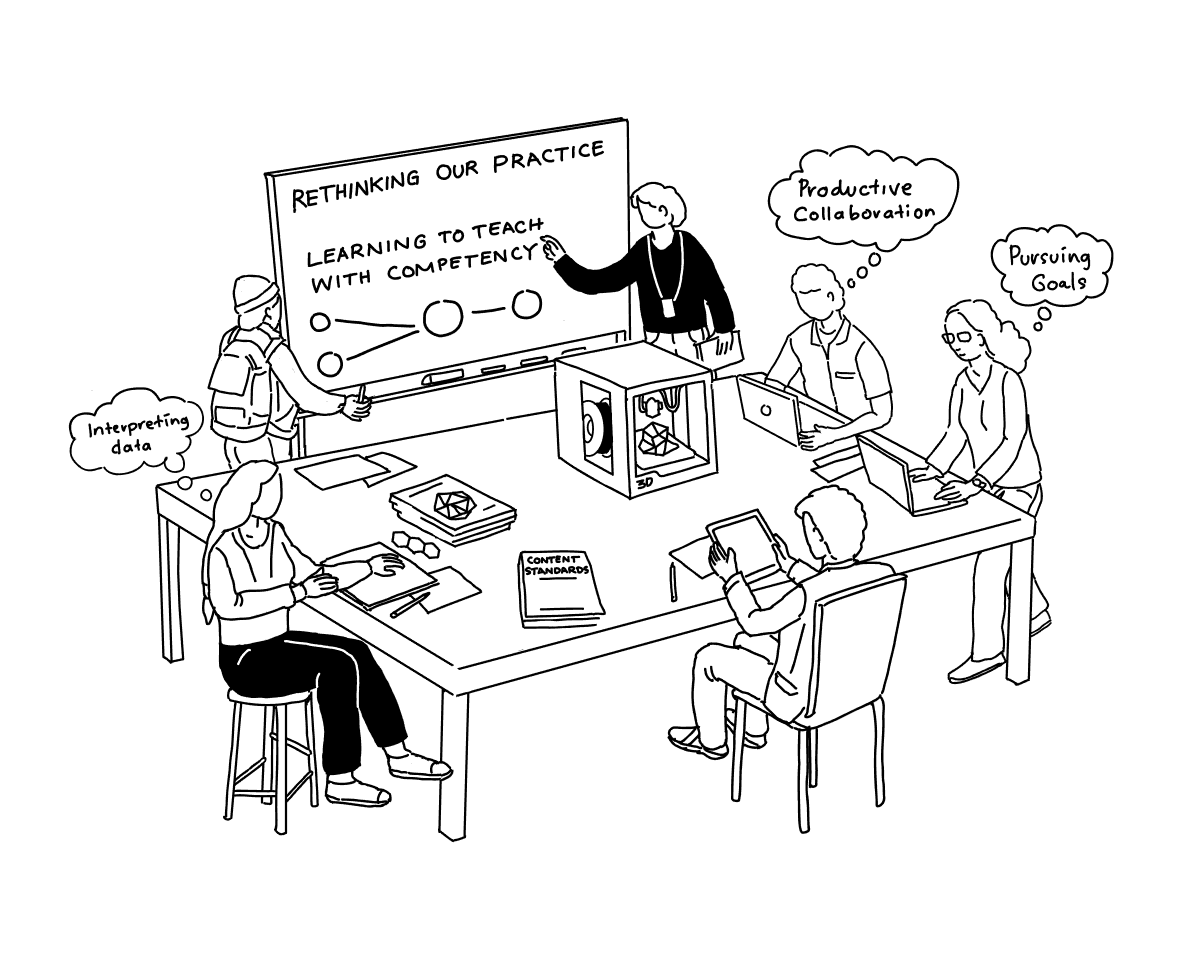
Teachers are the foundation of any effort to reimagine the high school learning experience and improve student outcomes. As schools shift from traditional time-based class periods to more flexible, student-centered learning models, educators will face new challenges—and new opportunities—that require significant shifts in professional practice. State leaders can support this transition by equipping teachers with the tools, resources, and professional learning needed to explore and adopt innovative instructional strategies.
Most high school teachers have limited experience with approaches that integrate academic knowledge and durable skills—such as competency-based and project-based learning—where students earn credit by demonstrating mastery. Adopting these methods requires new knowledge grounded in the science of learning, deep shifts in daily practice, and a clear understanding of the student competencies adopted by the state or district (Policy Action 2).
For all of these reasons, redesigning the high school experience must include robust, ongoing support for educators. This support can include professional development opportunities, pilot programs focused on building capacity, and access to high-quality examples of powerful learning experiences that integrate durable competencies. Educators also need opportunities to test and refine these approaches in real-world settings.

Teachers are ready to lead this transition. A 2024 Education Week survey found that while only 13 percent of teachers had experience with competency-based instructional approaches, 69 percent expressed interest in learning more or trying them in their own classrooms. More than half expected their districts to implement competency-based education within five years. The biggest barrier? A lack of support for making the transition, according to educators, with half citing “teachers don’t know how to do it” as a major concern.
Teachers expressed similar enthusiasm for project-based learning in a 2021 survey, with 78 percent saying it would benefit their students. When asked why, they cited “student voice and choice” in the learning process; a focus on real-world problems of interest to students; and they way that project-based learning builds on student strengths to develop confidence.
If America’s high schools are engines of opportunity, teachers are the fuel that keeps them running. Research consistently shows that teachers have a significant impact on student learning and later life success. But we also know that teaching is among the most demanding professions, carrying a higher workload than many other jobs. To truly transform high schools, we must give teachers the support and resources they need—and deserve—to design the powerful learning experiences today’s students require.
To meet the criteria for this policy action, a state must devote resources to developing the capacity of high school educators and leaders to implement learning models that integrate durable competencies with academic knowledge and skills, by:
Funding professional learning for teachers in effective instructional approaches that integrate academic and durable skills, such as project-based or competency-based learning; or
Requiring preparation in those approaches for pre-service teachers; or
Establishing and funding a pilot program in those approaches that includes professional learning for educators; or
Publishing resources for high school educators that provide models and exemplars of those approaches, along with guidance to support their implementation.
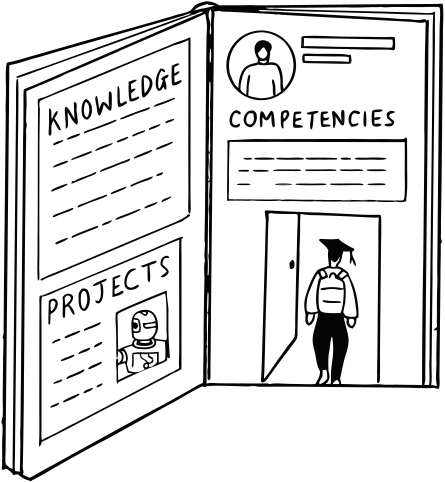
Excellence looks like: teachers are empowered to design transformative learning—and supported to succeed. It starts before they enter the classroom—but learning never ends there. Teachers have on-going support to meet the demands before them.
Download the How to Be a Frontier for State Excellence Guide here