Overview
Florida state leaders have taken steps to transform high school education by prioritizing access to advanced coursework and robust work-based learning opportunities. Through initiatives like the Workforce Development Capitalization Incentive Grant Program, Florida has invested millions to create and expand career and technical education (CTE) programs in high-demand fields such as aerospace, cybersecurity, and healthcare. These programs offer students hands-on training and the opportunity to earn industry-recognized certifications.
Additionally, high school students are encouraged to participate in advanced academic opportunities like Advanced Placement (AP), International Baccalaureate (IB), Advanced International Certificate of Education (AICE), and dual enrollment, enabling them to earn college credit and prepare for postsecondary education while still in high school. To support this effort, the state also provides financial incentives to schools and teachers for student success in these programs.
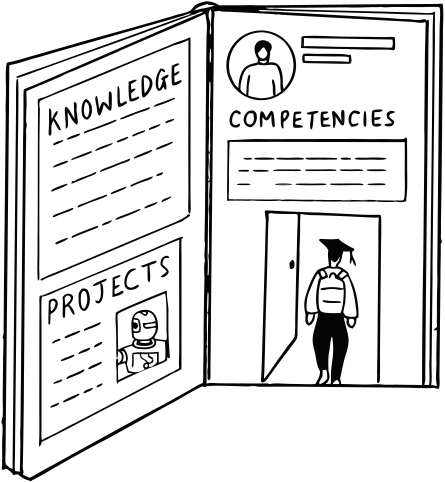
To build on these efforts, state leaders could work with communities to develop a Portrait of a Graduate that reflects the broad set of competencies all high school graduates should have by the time they leave high school, and explore opportunities to launch a statewide initiative with dedicated resources to incentivize community-led high school redesign. State leaders could also offer more flexibility from seat time requirements, enabling students to earn credit through demonstrations of proficiency.